- 6 out of 10 Belgians are (very) satisfied with their current wages. That is as many as before the corona crisis;
- Education staff are happiest with what they get paid each month;
- Wage satisfaction in the IT sector takes a dive; Hospitality and catering staff are notably more satisfied with their wages than before the crisis;
- Young people starting their first job are very happy with their salary, but expect a raise after one year;
- Belgians are as satisfied with their wages as they were at the start of their career after 25 years of employment.
6 in 10 Belgians (59%) are happy with their current wages. This is the same number as just before the pandemic. Education workers appear to be the most satisfied with their current income. Remarkably, despite the long shutdown in the hospitality industry, more hospitality workers (57%) are now satisfied with what they earn compared to two years ago (47%). In IT – a sector particularly boosted by the crisis – workers expect more pay for their work compared to 2019.
This is shown by the bi-annual Salary Report of Belgian job site StepStone among more than 25,000 Belgians. “Temporary unemployment and stagnating company results have put the increase of salaries under pressure, but the shortage on the labour market and the ‘war for talent’ have given a positive impulse. As a result, Belgian wage satisfaction has remained stable”, according to StepStone.
The COVID-crisis has hit the economy hard. At the peak of the pandemic, more than 150,000 Belgians were temporarily unemployed. Stagnating company results meant that salary increases often remained taboo. Despite the difficult year and a half, the majority of Belgians, around 60%, are currently satisfied with what they earn.
“It is good news that many Belgians are still positive about what they earn compared to before corona. It is fairly surprising, because many compatriots have been temporarily unemployed for the past year and a half. Many also saw a pay rise go up in smoke. Although the average wage of Belgians increased by 1.8% during the crisis, according to the most recent figures from HR service provider SD Worx, it would probably have increased more without the COVID-crisis. Wages are and will always be an important criterion for companies to keep their best talents on board. Certainly, in the tight labour market, candidates are more than ever in control of choosing their employer.”, says Killian Cramers, B2C Marketing Manager, StepStone Belgium.
Large differences between sectors
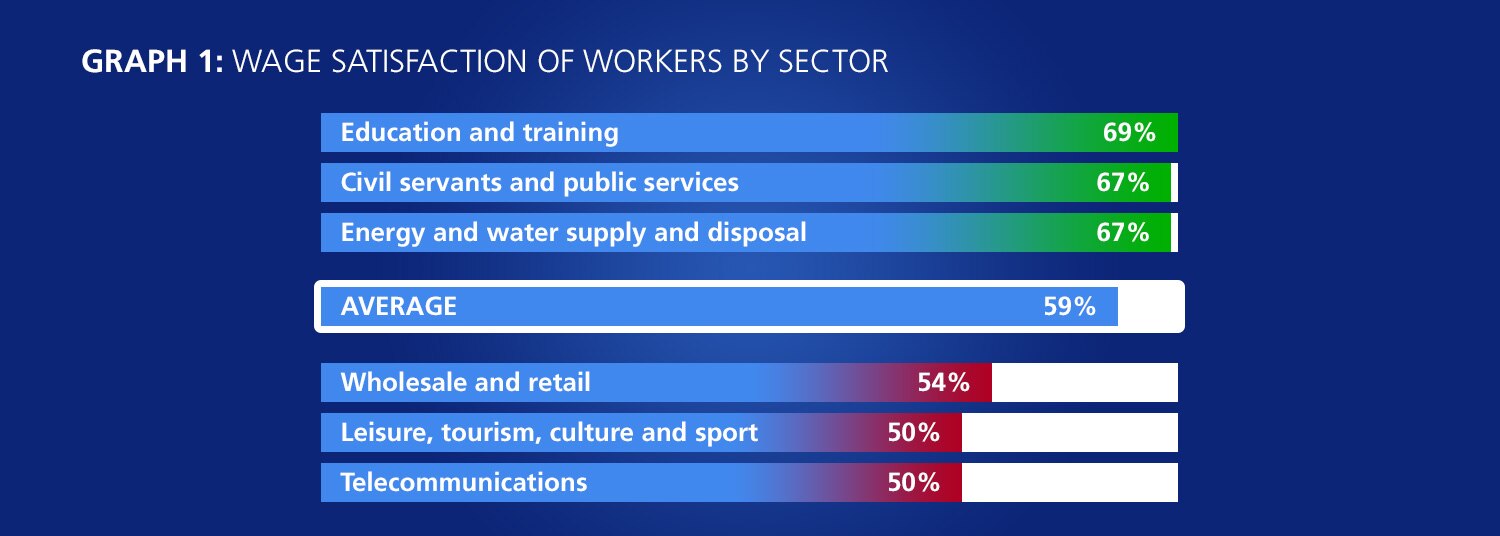
Satisfaction with wages does not appear to be equally high in all sectors. Belgians working in the public sector are the happiest with their monthly income. 69% of teaching staff and 67% of public institutions workers are satisfied with their pay packets. Employees in the energy sector (67%) and the chemical industry (65%) also feel that they get paid well.
Striking: despite the COVID-crisis, hospitality workers are significantly more satisfied with their wages than two years ago. In 2019, almost half (47%) of hospitality workers were satisfied with what they earned, now almost six in ten (57%) are. In the IT sector, however, pay satisfaction takes a notable dive: in 2019 it was in a stable mid-tier position at 57%, now the sector dangles a lower at 55% (despite a general wage stability or increase in the sector).
Here is an overview of the three most and three least satisfied sectors:
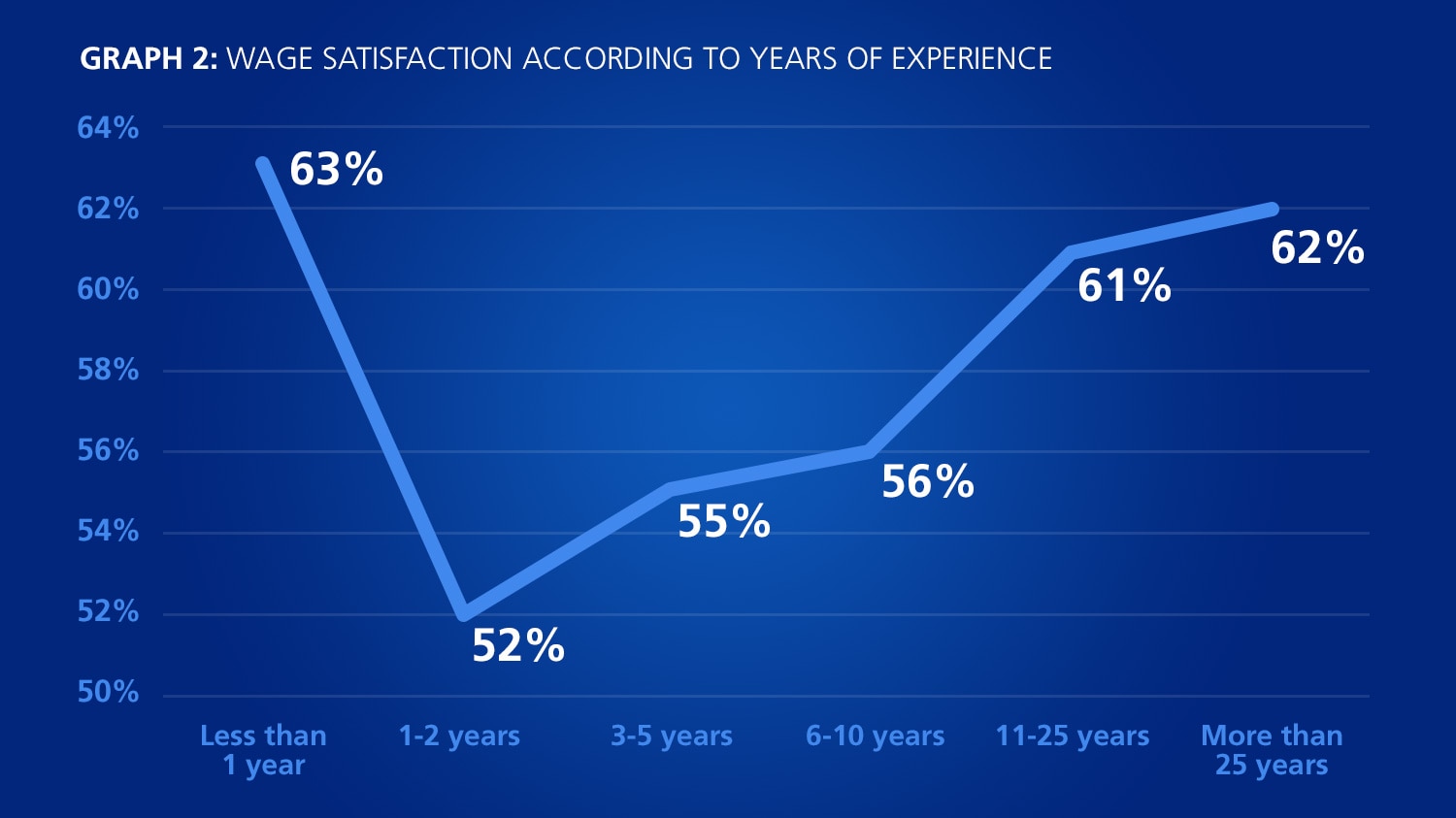
Wage satisfaction among young people starts off very high, but soon drops to a low point
Seniority also plays an important role in the Belgians’ pay satisfaction. 63% of those who have just started working are happy with what they get in their bank account every month. After one year of work experience, satisfaction drops to a low point: 52%. It is only after 25 years of work that employees are again as satisfied with their pay as they were at the start of their career.
“It is therefore important to properly inform this group about their salary through training and interviews, but also online tools such as the Salary Planner. Setting the right expectations during recruitment is equally crucial. It pays – literally and figuratively – for both employers and employees to do their salary homework“, states Killian Cramers.
Regional differences in wage satisfaction
In addition to the sector in which we work, the location also has a significant impact on our pay satisfaction. Workers in the north of the country are generally happier about their wages than those in the south. Employees in Antwerp, East & West Flanders and the province of Luxembourg are the most satisfied (61% are always satisfied with their wages). The provinces of Hainaut (54%), Liège (54%) and Walloon Brabant (55%) are at the bottom of the list when it comes to wage satisfaction.
Methodology
The Salary Report study is based on the results of the StepStone Salary Planner, which includes more than 25,000 datasets for this study. The data comes from StepStone’s Salary Planner between January 2018 and October 2020. More information on the methodology of this tool can be found on this page.